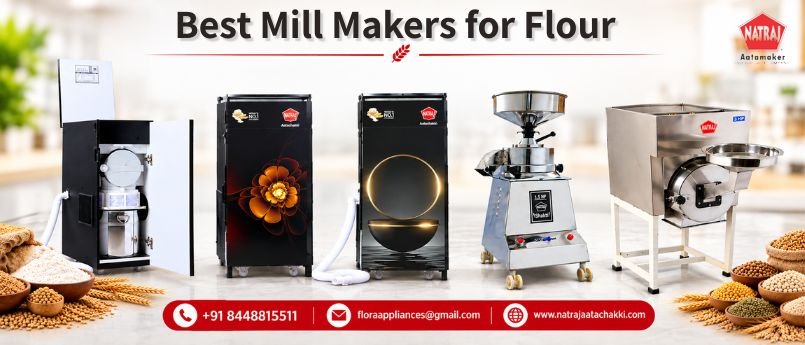
Best Mill Makers for Flour, Grain, and Food Processing Industries
A milling machine can look like a straightforward piece of industrial equipment. In practice, choosing one for a commercial operation involves quite a few decisions.
The type of grain being processed, expected output, available space, electricity consumption, flour quality and maintenance requirements all matter. A machine that works well for one business may not necessarily suit another. That is why businesses comparing Best Mill Makers should first understand what their production actually demands.
Start With the Product You Want to Mill
Wheat is only one part of the food milling industry. Depending on the business, the equipment may be used for wheat, rice, maize, millet, bajra, jowar, pulses or other grains.
Each material can behave differently during grinding. So before comparing machines, make a simple list:
- ✓ What grains will you process?
- ✓ How much material needs to be milled daily?
- ✓ What type of flour or output is required?
- ✓ Will the machine run continuously?
- ✓ Do you plan to expand production later?
These answers make it easier to narrow down suitable equipment.
Capacity Should Match Your Business
One of the easiest mistakes is buying based on the largest capacity mentioned in a brochure. A higher-capacity machine isn't automatically a better investment.
If your actual requirement is modest, an oversized machine can increase the initial investment, power requirement and space needed without giving you a useful return.
On the other hand, choosing equipment that is too small can become a problem when production increases. A practical approach is to compare your expected daily requirement with the machine's actual operating capacity for the grain you intend to process.
What Should You Look for in Milling Equipment?
There are several points worth checking before making a decision.
|
Factor |
Why It Matters |
|
Grinding capacity |
Determines how much material can be processed |
|
Grain compatibility |
Ensures the machine suits your raw material |
|
Flour quality |
Important for consistent finished products |
|
Motor and power |
Affects operating requirements |
|
Construction |
Influences durability and long-term use |
|
Cleaning |
Important when processing food products |
|
Maintenance |
Reduces unnecessary production interruptions |
|
Service support |
Useful when technical problems occur |
A good machine should fit into the production process rather than becoming a bottleneck.
Commercial Milling Is About More Than Grinding
Consider a business supplying fresh flour to local retailers. If milling takes longer than expected, packaging and delivery schedules can also be affected. If the flour quality changes from one batch to another, customers may notice that difference.
This is why commercial milling equipment needs to be considered as part of the entire workflow.
Raw material → cleaning → milling → collection → packaging → distribution
The smoother these stages work together, the easier it becomes to maintain a predictable production routine.
Why Maintenance Deserves Attention
Industrial equipment spends a lot of time working. Dust, grain particles and regular mechanical movement naturally make cleaning and maintenance important. Ignoring routine servicing can eventually affect performance.
Before buying, ask the manufacturer:
- 1. What routine maintenance is required?
- 2. Which components need regular replacement?
- 3. Are spare parts available?
- 4. How easy is cleaning?
- 5. Is technical support available after installation?
- 6. What warranty is provided?
These questions may seem basic, but they become important once the machine is running every day.
Don't Ignore Future Expansion
Your current production isn't necessarily your future production. A small flour business may start with local orders and gradually add retailers, distributors or institutional customers. If that happens, replacing equipment too soon can become an avoidable expense.
When speaking with Mill Makers, discuss your expected growth as well as your current requirement. A manufacturer may be able to suggest equipment that gives you room to increase production without completely redesigning the setup.
Where Natraj Aata Chakki Comes In
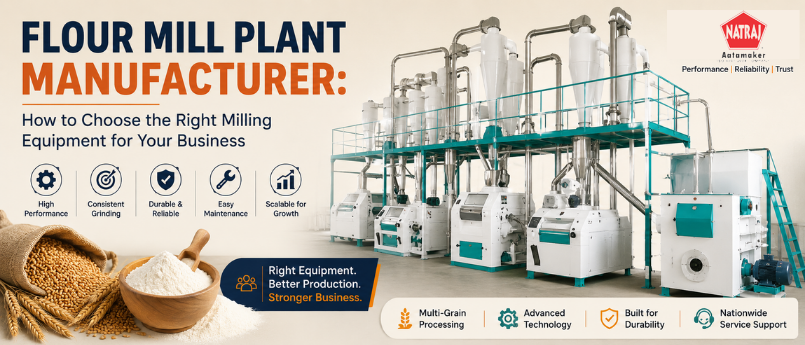
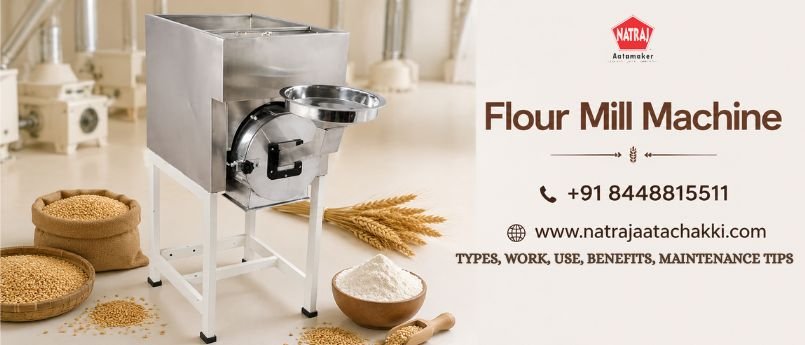
Natraj Aata Chakki has built its product range around flour milling and food processing requirements, with equipment for domestic, commercial and larger-scale applications. Its range includes commercial flour mills and machines designed for processing different grains.
The company also provides information about grain-specific grinding capacities, which is useful when comparing equipment for different raw materials rather than relying on one generic capacity figure. For a business buyer, that practical information is more useful than simply hearing that a machine is "high performance."
A Quick Buying Checklist
Before selecting a milling machine, keep this list handy:
- ✓ Identify the grains you will process
- ✓ Estimate daily production
- ✓ Check grain-specific capacity
- ✓ Confirm power requirements
- ✓ Measure available installation space
- ✓ Ask about cleaning and maintenance
- ✓ Check spare parts availability
- ✓ Understand warranty terms
- ✓ Discuss installation and training
- ✓ Consider future production requirements
The best milling equipment is not necessarily the largest or most expensive option. It is the one that fits your raw material, production volume, operating conditions and growth plans.
If you're comparing Flour Mill Makers for a flour, grain or food processing business, start by defining those requirements and then evaluate machines accordingly. You can explore commercial milling solutions from Natraj Aata Chakki.