Natraj Aata Chakki Launch: Best Commercial Automatic Flour Mill Machine
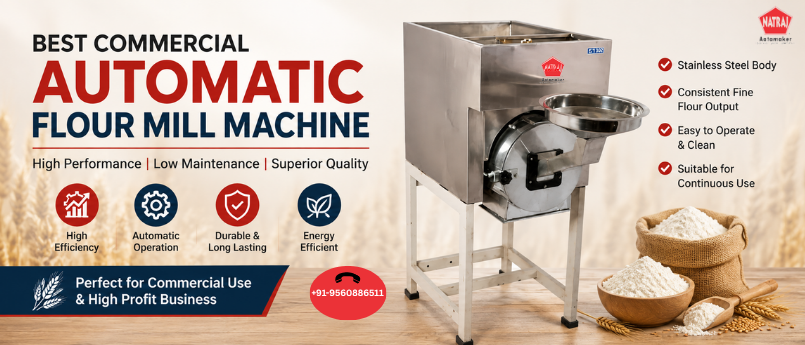
The Commercial Automatic Atta Chakki Machine is designed for businesses that need a practical solution for regular flour milling rather than occasional household use. But before choosing one, it is worth looking beyond the machine’s appearance or headline specifications.
A Flour Mill Is a Business Tool, Not Just a Machine
When flour production becomes a regular part of a business, manual handling quickly becomes difficult to manage. There is raw material to process, flour quality to maintain, orders to complete and customers waiting for consistent service.
That is where an automatic flour mill can make day to day operations more manageable.
The Commercial Automatic Flour Mill Machine is designed for businesses that need a practical solution for regular flour milling rather than occasional household use. But before choosing one, it is worth looking beyond the machine’s appearance or headline specifications.
What matters is how well it fits the actual workload.
Who Can Consider a Commercial Atta Chakki?
commercial automatic atta chakki machine requirements can vary considerably. A small neighbourhood flour mill may have different needs from a larger food business or grain processing operation.
A commercial machine can be considered for:
- Local flour milling shops
- Grocery and grain businesses
- Food processing units
- Restaurants and food service operations
- Small scale flour businesses
- Businesses offering customised flour milling
The right machine depends on expected production, available space, power requirements and the type of grains being processed.
Why Automatic Operation Matters
An automatic system can reduce the amount of manual intervention required during routine milling.
That becomes useful when the machine is being used repeatedly throughout the working day.
For a business owner, the practical questions are straightforward:
How much can the machine handle?
How easy is it to operate?
How much attention does it require during regular use?
Can it fit comfortably into the existing workspace?
These questions are often more useful than simply comparing machines by price.
Look at the Machine From a Business Perspective
Suppose a flour shop receives several customer orders during the morning. The operator has to manage grain input, milling, collection and packaging while also dealing with customers.
An automatic flour mill can help streamline parts of this routine.
That doesn’t mean every commercial operation needs the largest machine available. In fact, buying more capacity than the business can realistically use may unnecessarily increase the initial investment.
A better approach is to match the equipment with the workload.
Quick comparison
|
Consideration |
What to Check |
|
Capacity |
Expected quantity of flour per day |
|
Operation |
Level of automation required |
|
Space |
Available installation area |
|
Power |
Electrical requirements |
|
Grain type |
Types of grains the business processes |
|
Maintenance |
Cleaning and servicing requirements |
|
Support |
Availability of after sales assistance |
What Makes a Commercial Flour Mill Worth Considering?
A good commercial machine should fit into the business workflow without creating unnecessary complexity.
Before purchasing, check:
- Production capacity
- Build and component quality
- Ease of operation
- Cleaning requirements
- Safety features
- Power consumption
- Service availability
- Warranty and support terms
The last two points are easy to overlook.
They shouldn’t be.
A machine is a long term business asset. Support after installation can be just as important as the initial purchase.
Natraj Aata Chakki Enters the Commercial Space
Natraj Aata Chakki is a recognised name in the Flour Mill Plant Manufacturer segment, and its move into commercial equipment addresses a different requirement: businesses that need more consistent and regular milling capability.
For someone comparing a Automatic Atta Chakki Machine, the Natraj range can be evaluated according to the operation’s expected workload, space and production requirements rather than choosing solely on price.
The important thing is to understand what your business actually needs before making the purchase.
Before You Buy
☐ Estimate daily flour requirements
☐ Check available installation space
☐ Confirm power requirements
☐ Identify the grains you intend to process
☐ Compare operating and maintenance needs
☐ Check warranty and service support
☐ Ask about installation and after sales assistance
Commercial flour mill machine is ultimately about consistency. The machine needs to keep up with the business without becoming difficult to operate or maintain.
If you’re planning to start or upgrade a flour milling operation, explore the latest Natraj Aata Chakki Flour Mill Dealers at www.natrajaatachakki.com and compare the available machine specifications with your actual business requirements.